|

| |
 |
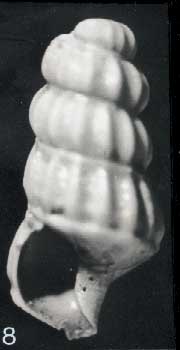
This tiny sinistral shell (height 1.5 mm) is only known from the Brejning Clay at Mogenstrup.
Only 5 specimens have been collected, all by processing of the clay. In 1990 it
was established as Laiocochlis (Laiocochlis)
supraoligocaenicus. |
 |
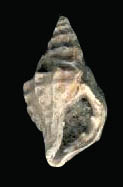
15 specimens of this species are known, all except one from the Brejning Clay
at Mogenstrup. Height up to 4 mm. It was established 1990 as Microdrillia
(Andersondrillia) brejningensis, because the holotype was the specimen
from Brejning.
The subgenus Andersondrillia was also established in 1990, and the
species Microdrillia grippi, known from the Arnum Formation in Denmark
and the German and Dutch Miocene, is referred to Andersondrillia and type species
for this subgenus. It was named after the German
professor H.-J. Anderson, who has contributed much to the knowledge of the
molluscs from especially the Oligocene and Miocene of the North Sea Basin.
|
 |
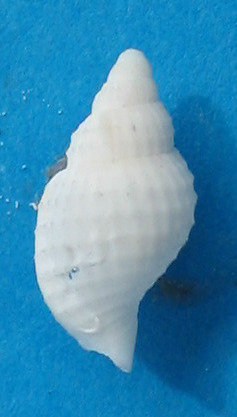
This gastropod belongs to the family Muricidae and the species name is Muricopsis
pereger. The species is very rare in Denmark (2 specimen from Ĝlst, 2 from
Branden and one from Ulstrup). The illustrated specimen has been collected at
Ĝlst.. |
|

|
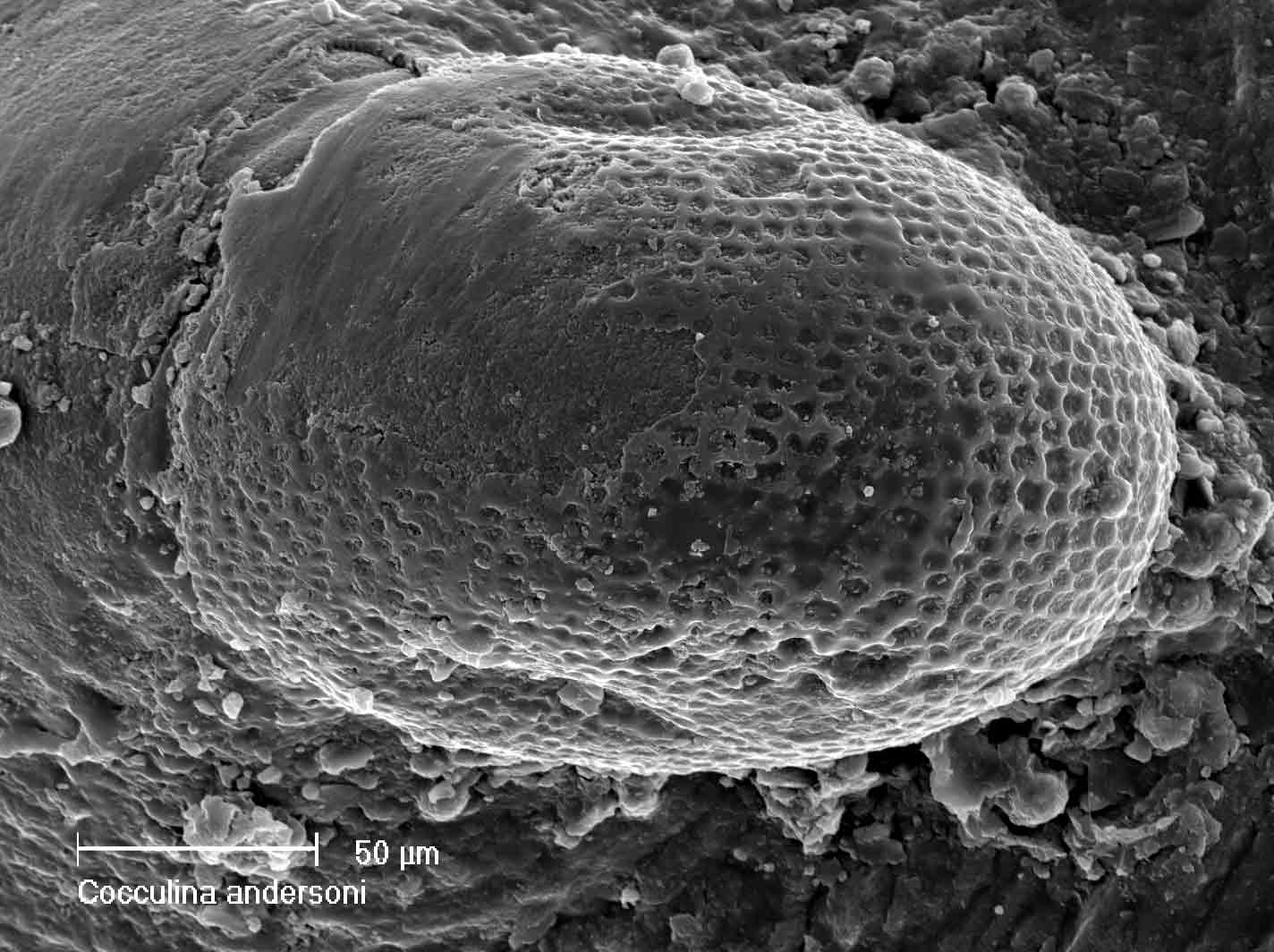
Protoconch of Mesopelex anderseni from the Gram Clay.
Length of protoconch is about 1/4 mm. SEM-photo by Andrzej Kaim, Warszawa.
The species is only known from Gram and was established 2005. |
The genus
Tatara from Fakse corallian limestone
The gastropod to the left has been collected in the so-called "nose-chalk".
The genus Tatara was until now known from the Eocene and Miocene
of Australia only.
The Danish species suggests a connection between the North Sea Basin and the
Australian region. It was recently established and described as Tatara danica
Schnetler & Petit, 2006.
The photo to the right shows a silicone rubber cast of an impression in
corallian chalk. On the photo of the adult specimen (estimated height 25 mm)
knobs on the columella and the internal side of the labrum can be clearly seen. |